Accidents Happen (Guest: Robert P. Bennett)

I’ve just signed a contract for my second novel, “Blind Traveler’s Blues.”

Wow, that feels good!

People ask me all the time. “How did you become a writer?” For me it wasn’t something I had always dreamed of being. It was an accident – literally !

Growing up I wanted to be a lawyer. Frankly, I always enjoyed arguing with people. My family would tell you that my ideas were not mainstream, and that I always find a different point of view than those around me. Alas, I was never a good student. I was not one of those kids for whom learning was easy. And, I was terrible at taking tests. I would study hard, feel I knew the material going in to test day, but then freeze up when the test paper sat before me on the desk. So, I never got the exceptional grades needed to get into a law school.

My saving grace was my mother. She convinced me that, since I always wanted to help people, and always argued the point of view of the disenfranchised, that I would make a good social worker ( her own calling by the way ). At the time I wasn’t sure I agreed. But, I finally decided, I could go to social work school for one year and reapply for law school ( with hopefully better grades ) if that was still what I wanted to do. I finished my studies, got my MSW, and went to work at a group home for mentally challenged men. And then I had a car accident!

Car accidents are great if you want to completely change the direction your life is going. Frankly, they serve no other useful purpose, and I don’t recommend them as a fun way to spend a few minutes. But, it was because of the accident I became a writer, again with my mother’s help (no, mom was not in the car when I had the accident).

At the time she was working at a mental health agency where someone, for some reason, had posted a notice for classes at a place called The New York Studio for Writers. As it turned out, the school was only a couple of minutes from our home. Well, Mom remembered that I had always been writing stories and little diddies growing up. She gave me the notice. I made a phone call. Soon after, I was sitting with a small group of wannabe writers learning the craft.

That was more than seventeen years ago. Since then I’ve devoted my life and my writing skills to what I call “issues of disability,” everything from sports to politics. I write about people who challenge societal views of what we commonly, and mistakenly, call ‘disabilities’ and ‘handicaps.’ I write about technology that helps people with disabilities lead better, easier, more productive lives. I write about social and physical barriers and how to circumnavigate them. You see, what I’ve learned over the years is that we’re all disabled in one way or another. Some disabilities, like my need for a wheelchair, are more obvious than others. Some, like glasses or hearing aides, are more socially accepted. In my worldview, it is society itself that is disabled because it consciously or unconsciously creates physical/intellectual/emotional barriers for people.

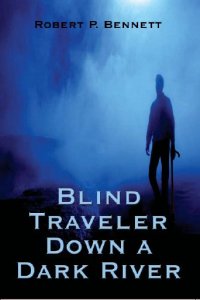
Some six years ago or so I wrote an article about a prototype device that would combine GPS and virtual reality technologies to allow blind people to navigate through their world. After the article was published, my brother and I thought, “what would happen if the device had a glitch, allowing the user to ‘see’ an event that was happening a few blocks away from where he currently was.” That became the impetus for Blind Traveler Down a Dark River, the first book in the Blind Traveler series. The second book, Blind Traveler’s Blues, is soon to be published, in ebook format, by Echelon Press.

If you have something to say, don’t wait for an accident – try writing.
Robert Bennett
Writer/Lecturer
Issues of Disability
Author: The Blind Traveler Series
http://www.EnablingWords.Com

I Sorta Kinda Wanted to Write This (Guest: Alan Cook)

I don’t text or tweet but I can see how using abbreviations and shortcuts while texting or tweeting can be helpful. I usually write complete sentences in emails, but if others don’t want to that’s fine. But as the son of an English teacher, I’d like to complain about the state of oral conversation, from newscasters on down to college graduates.

This situation with the way we speak English these days has been kind of nagging at me and I sort of wanted to write a little bit about it, but I’ve been, you know, kind of busy, and like, I haven’t been able to find the time.

The other day I did something for a man and he said “Thank you” and I said “No problem” and he said “Whatever happened to ‘You’re welcome?’” and I said “No problem,” because I didn’t know what else to say.

I’m pretty good at doing good deeds for people. A woman at the market was, you know, having trouble with a grocery cart and I said, “Can I help you?” and she said, “I don’t know, can you?” so I slapped her since she was being kind of a wiseacre.

The sun was warm and it was a pretty amazing day out so my wife and I went to the museum and we saw the most unique exhibit I’ve ever seen. It was, you know, one of those dinosaurs who was like, kind of big, like a T-Rex, and he was eating this other guy who was laying on the ground. I’m not lying when I say that. But I can tell you that if I met a T-Rex in real life I’d be a little bit scared because he was sort of awesome.

So that’s the, you know, reason I haven’t been working on this English project, because I’ve been, like, kind of busy, but I expect to do it soon, and when you read it you’ll say, “Wow, this Cook writes pretty unique stuff. He is amazing.”

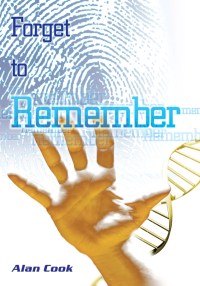
Alan Cook began writing books after he abandoned the computer industry (or it abandoned him). He is the author of eight mystery novels. He has won two Silver Quill awards from the American Authors Association and two best geographical location awards from Reader Views. His latest mystery, Forget to Remember, features a young woman with amnesia. She is declared to be a non-person by the government and someone may be trying to kill her. Alan lives with his wife on a hill in Southern California. His website is http://alancook.50megs.com

Click Cover to Buy Now!

Carol Golden isn’t her real name. She doesn’t remember her real name or anything that happened before she was found in a Dumpster, naked and unconscious, on the beautiful Palos Verdes Peninsula in Southern California.

After helping her get some initial medical treatment, government at all levels officially declares her a non-person and doesn’t want anything more to do with her. She can’t work because she doesn’t have a Social Security number, which she can’t get because she doesn’t have a birth certificate. She can’t get a driver’s license, and, having no I.D. she can’t fly.
Fortunately, she receives help from Rigo Ramirez, the young man who found her, and his family. Frances Moran, a genetic genealogist who is an expert at identifying and finding people using DNA and the Internet, offers her services, but nobody appears to be looking for Carol. Nobody, that is, except whoever left her for dead. Is this person going to return to finish the job?
Carol must overcome the obstacles placed in her path by an unfeeling bureaucracy while she searches for clues to her identity. If the law doesn’t protect her, why should she stay within the law? In addition, as her situation gets publicized, the risk of her attacker finding out that she’s still alive increases.
Carol discovers that she’s an “action kind of girl” who doesn’t take kindly to being told what she can’t do, which is just about everything. She realizes that if she’s going to find out who she is, she has to travel to the East Coast and England and do whatever else needs to be done, regardless of the risks.

Is Writing Hard Work? (Guest Blog: Gerald Weinberg)

Garrison Keillor had this to say about the question of how hard it is to write:

“Okay, let me say this once and get it off my chest and never mention it again. I have had it with writers who talk about how painful and harrowing and exhausting and almost impossible it is for them to put words on paper …”

I recommend you read the whole essay, then think about your own feelings about writing. Personally, I think he’s both right and wrong. He’s right because writing is easy—unless you don’t want to write. Then it’s hard.

I use this observation every time I start to think that writing is hard. I interpret that feeling to mean that I don’t want to write this particular piece. It might be because it stinks, or the subject doesn’t interest me, or it’s wrong. It might be because I’m sick, or tired, or just feel like playing with the dogs.

But, you ask, isn’t that the dreaded “writer’s block”? It might be, if writer’s block was real, but it isn’t. You don’t hear about “surgeon’s block,” or “bricklayer’s block,” do you? No, the writer’s-block myth is just another symptom of what Keillor describes as “… the purest form of arrogance: Lest you don’t notice what a brilliant artist I am, let me tell you how I agonize over my work.”

For more on so-called “writer’s block,” watch my interview on YouTube .

Writers aren’t that special. Everybody’s work hits snags from time to time. If you want to write (as oppose to wanting to have written), then you’ll find a way around these snags, and actually enjoy doing it. The principal way is to have a queue of many writing tasks, so if you’re stuck on one for the moment, you can switch to another. That’s part of my Fieldstone Method. (Weinberg on Writing: The Fieldstone Method.)

You can learn a whole lot more about Jerry Weinberg on his web site. It’s pretty interesting stuff. There is also plenty of info about his other books and works by visiting here.