Tag Archives: writers

Would You Care for Some Humor With Your Homicide, Madam?

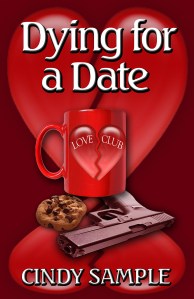
Click Cover to Buy Now!

I’ve been addicted to murder mysteries since the age of six when I discovered the Nancy Drew series was far more intriguing than the adventures of Dick and Jane. My first manuscript, “Cindy Parker and the Haunted Mansion,” was written when I turned my third-grade spelling words into a sixteen page novella. If my mother hadn’t made me go to bed at 8:30, who knows what kind of masterpiece I could have created. When the teacher gave me an A plus, I was officially bitten by the writing bug. It’s somewhat similar to malaria. Once you’re bitten, it may go dormant for awhile, but it will never totally go away.

Although a corporate career, marriage, children, and divorce intervened, my personal anti-depressant has always been to read a mystery by one of my favorite authors, a group of writers who not only devised a puzzle for me to solve, but also kept me laughing. They could turn the gloomiest day or mood into pure sunshine. When I sat down to write my first novel, I had one goal in mind. To write an intriguing murder mystery that also provided plenty of giggles. Seems simple, right? NOT!

I discovered it wasn’t that easy to mesh the suspense of a murder investigation with those special laugh-out-loud moments. We can’t have our heroine blithely tripping over dead bodies, right and left. While the premise of mid-life dating itself can provide laughs (ah, the true stories I could share) there is still a definite fear factor involved. What if you don’t meet Mr. Right and instead meet Mr. Wrong?

It’s critical that readers identify with and root for the protagonist as she searches for the killer. She may be forced to do so to save her reputation or to stay out of jail. It definitely helps if your protagonist is relatable to her readers. In one scene in DYING FOR A DATE, Laurel McKay discovers that when faced with a gun, she didn’t want to flee, she just wanted to pee. I know I’m not the only member of the “hot flash” set who can relate to that.

There’s also the romance factor. How do you maintain conflict and tension between your protagonist and the investigating detective? Especially when he can’t decide if he should arrest the adorable soccer mom, or kiss her? We need to keep the audience engaged in the mystery but still provide those moments that sizzle and sparkle with laughter.

I would love to hear from both mystery readers and authors. Does anyone else enjoy a little slice of humor with their homicide? 

Although Cindy Sample’s initial dream was to be a mystery writer, she put aside her literary longings and applied for a job as a receptionist with a real estate office. Her career eventually led to President of a national mortgage banking company. After one too many corporate mergers, Cindy decided it was more fun to plot murder than plod through paperwork. Her experiences with on-line dating sites fueled the concept for Dying for a Date, a humorous romantic mystery set in the California gold country.

Cindy writes a column entitled Hot Flash for the Gold River Community Newspaper. She is a past president of the Sacramento chapter of Sisters in Crime and is the co-chair of the Left Coast Crime Convention, which will be held in Sacramento in 2012. If you’re interesting in volunteering, she’d love to hear from you. Contact Cindy at www.cindysamplebooks.com


Why Would You Do That? (Guest Blog: Marian Allen)

Click Cover to Buy eBook Now!

I like a good piece of literary fiction as much as the next person, and better than a lot of next persons, depending on who the next person is. But come on.

Any fiction–literary or genre–needs to do certain things:

  1. Have characters who do things for reasons that make sense to them. The reasons don’t have to make sense to the reader, but they have to–believably–make sense to the characters.
  2. Have a plot arc with a beginning, a middle and an end. The plot arc may be all chopped up and shuffled around, the ending may be arbitrary because real life doesn’t have neat endings, but the story must have shape, or else it isn’t a story.
  3. Contain no elements that don’t serve the story. I don’t care how much you know about anything; if what you know doesn’t enrich your tale, save it for a cocktail party. If I’m too undereducated to get your allusions, that’s my hard luck, but don’t make me look something up for nothing. Just don’t.
  4. Not have too many words. That doesn’t mean “write short”. That means use as many words as you need, but don’t use more. Not a vast deal more, anyway. Beautiful language in a story is like butter on a potato. I’m partial to it, but I want more potato than butter. Way more.

When I finish your fiction, I don’t mind saying, “I’m not sure I got that.” I don’t mind saying, “I guess I’ll need to chew that over and read it again to get the most out of it.” I do mind saying, “There’s hours of my life I’ll never see again.”

Marian Allen writes science fiction, fantasy, mystery, humor, horror, mainstream, and anything else she can wrestle into fixed form.

Allen has had stories in on-line and print publications, on coffee cans and the wall of an Indian restaurant in Louisville, Kentucky. On Tuesdays, she posts on the group blog Fatal Foodies. Her novel, EEL’S REVERENCE, a science fiction/fantasy, is available through Echelon Press in various electronic formats.

Allen is a member of the Green River Writers and the Southern Indiana Writers Group, and is a regular contributor to SIW’s annual anthology.

Selling Books the Old Fashioned Way

Click Cover to Buy Now!

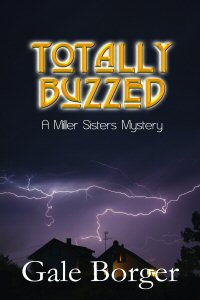
A few minutes ago, I read a tweet from one of my authors, Gale Borger, that asked, “Where will authors sell books with so few indy stores willing to do author events and chains closing?” [Twitter: @galeinwisconsin]

This is something I have been working on for quite a few years, but now I am seeing others starting to get worried about it. We started Echelon Press ten years ago and from the beginning, we have been attending conferences, conventions, and books festivals. Why? Because, silly, that’s where the readers are.

“No, no,” you argue, “readers are at bookstores.

“No, not exactly. Consumers are at bookstores. They buy books. They also buy pens, journals, lap desks, games, music, and all kinds of other things that bookstores have included in their inventory.”

You’re shaking your head now, right? “But those are readers.”

“Not exaclty, but kinda. They are people who read. Oh sure, that is a pretty generalized statement, but I think that most of those people (not all) could do without books.”

“What do you mean?”

“My experience is that most people these days who go into bookstores are looking for something specific. A friend told them the latest Patterson is out, or there is a new diet book that is better than the Atkins Diet.” Okay, again, generalizing, but bear with me.

Lots of people read, but don’t you think that those who are real readers are much more organized and deliberate about their book habits? Readers keep track of their favorite authors, they log the books and the series they read, and they will read anything, including the shampoo bottles in the bathroom. How many diehard readers, can name more than a few ingredients off the back of the Lysol can? Seriously.

Those people are readers, and they will go where the books are and where the authors are. That is one of the reasons Echelon has always participated in as many book festivals as we can. Readers go to festivals and conventions. They crave books and they will spend their last dollar on a book and make the cat eat leftover meatloaf with everyone else.

Bookstores are great, but there is a lot of panic in society right now about where readers will be able to get books if the bookstores all go away.

First of all, the bookstores are not all going away. Some are going, others are coming. There will always be fluxuation. My suggestion to you readers, and especially to you authors who are seeing less and less opportunities to meet and interact with your readers in proper bookstores, is to check out the book festivals and reader conventions in your area. These are such awesome places to find books of all kinds and to meet new and upcoming authors. If you’re lucky you may even find a few of your best selling favorites.

If you’d like to meet some really cool authors, you might want to look into attending the South Carolina Book Festival in Columbia, SC. May 14-15, 2011. In my Opinion, this is the best book festival in the south.

Even better than that is the jewel in the Midwest festival crown. Printers Row Lit Fest. in Chicago, IL June 2-3, 2011. This festival is blocks and blocks of books and authors and so much fun it should be illegal. This festival has been a favorite of Echelon’s since we discovered it in 2002. We never miss it.

Hopefully you readers out there will stop by and visit the Echelon authors when you see us at the festivals and conventions. We LOVE meeting readers and trying to convert you into our fans. At Echelon we believe the best way to reach readers is go where they can find us!