Hullo! After writing yesterday’s Blog Post [WTF? Begging for Reviews] I received several emails from folks who said they would like to review one of our books, but they didn’t know how to write a review. A couple even said they had Googled for the info, but got so many different ways, they were left confused.
Since I am asking for reviews, I will tell you how I write reviews. This is not a rule or even a guideline. It is simply how I choose to do it, and you are welcome to give my method a try, if you’d like.
First: I try not to offer up a synopsis of the story. As readers we see different things and we may see them differently. If the review requires a description, I use the jacket copy provided by the publisher/author.
Second: Now, I said the description was first, but for me it really isn’t. It was just easier to start there. I try to make my first paragraph about my initial reaction of what I thought of the book/story. I write quite a few reviews, so this may vary a little, depending on my mood.
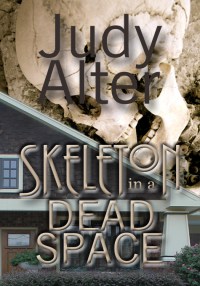 For example:
You should really read this book. I mean if you like cozy mysteries with spunky heroines and situations that could easily happen to you. from the opening chapter, Judy Alter takes the reader through the adventures of a real estate agent who just happens to own a property with a skeleton in the closet. Literally.
Third: The next paragraph or two (I try to keep them short), I go into a little more detail about what I liked or didn’t like. I try to include at least one or two comments about the plot, the pacing (how easy it was to stay in the flow of the story), the characters, and if the use of surroundings is good I like to comment on that as well.
For example:
When first we meet Kelly O’Connell it appears she is at the beginning of a normal day. But one phone call changes all of that. She’s got a remodel going on and now there’s a dead body, and old dead body, mucking it up.
From the discovery of the body to the resolution of the mystery, the author treats readers to a variety of unique characters and situations. We get goofy people, we get seriously mean villains, and we get a hint of potential romance.
Lastly: I use this final paragraph to give my overall opinion of the book. I try to offer up at least one solid sentence that the author/publisher could use on bookmarks or their website. I do that as a courtesy. This paragraph is all about what I want to tell other readers. I am after all, reviewing as an aid to other readers. A review is an opinion and they will be different from every reader, because we all like and notice different things.
For example:
No one aspect overshadows any of the others and I consider this to be one of the best paced stories I’ve read in a while. Not a particularly clever mystery, but solid and enjoyable. I look forward to the next book in the series. This is author one to watch.
I’ve been asked why I choose to write/post negative reviews. I don’t consider any of my reviews negative. I consider them honest. There are some books that just don’t please me. In fact, some really bug me. I post those reviews as considerately as I can, but with my honest opinions. What I say about a book, whether good or bade, is not law. It is my OPINION. Many mothers remind us that “Opinions are like assholes, everybody has one.” It’s true.
I post reviews so that other readers can get an idea of what I saw when I read. And if they find something in my review that excites them (quirky characters) then it will encourage them to read the book. If they agree with me that (there is too much history in large dumps) they may skip it. It is their choice. I personally will not read a book that has no negative reviews. I can’t imagine a book that every single person likes. I prefer to read honest reviews about books so I can make a somewhat educated choice.
As an afterthought, I don’t recommend you ever EVER use a review to voice your personal opinion on an author. Reviews are not a tool for bashing people you don’t like. This seems to have gained some momentum lately and it is just bad form as a human being. You are not reviewing the author, you are reviewing the book. Leave the personal insults out of it. And if for some reason you find that a book has a tremendous amount, or even a small amount of technical errors, be delicate in your comments. Some book shave errors but are still great reads.I usually write:
Please note that this book contain some editorial errors, but they did not distract me from the story.
or
Please note this book contains editorial errors that I did find distracting to the story.
Simple and not vicious.
I hope this helps those of you who were looking for a little guidance for writing book reviews. If not, then no harm no foul.
The examples I used are from my actual review of Skeleton in a Dead Space (A Kelly O’Connell Mystery) by Judy Alter.





 Journey of the Heart