Category Archives: Guest Bloggers

Would You Care for Some Humor With Your Homicide, Madam?

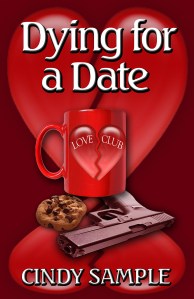
Click Cover to Buy Now!

I’ve been addicted to murder mysteries since the age of six when I discovered the Nancy Drew series was far more intriguing than the adventures of Dick and Jane. My first manuscript, “Cindy Parker and the Haunted Mansion,” was written when I turned my third-grade spelling words into a sixteen page novella. If my mother hadn’t made me go to bed at 8:30, who knows what kind of masterpiece I could have created. When the teacher gave me an A plus, I was officially bitten by the writing bug. It’s somewhat similar to malaria. Once you’re bitten, it may go dormant for awhile, but it will never totally go away.

Although a corporate career, marriage, children, and divorce intervened, my personal anti-depressant has always been to read a mystery by one of my favorite authors, a group of writers who not only devised a puzzle for me to solve, but also kept me laughing. They could turn the gloomiest day or mood into pure sunshine. When I sat down to write my first novel, I had one goal in mind. To write an intriguing murder mystery that also provided plenty of giggles. Seems simple, right? NOT!

I discovered it wasn’t that easy to mesh the suspense of a murder investigation with those special laugh-out-loud moments. We can’t have our heroine blithely tripping over dead bodies, right and left. While the premise of mid-life dating itself can provide laughs (ah, the true stories I could share) there is still a definite fear factor involved. What if you don’t meet Mr. Right and instead meet Mr. Wrong?

It’s critical that readers identify with and root for the protagonist as she searches for the killer. She may be forced to do so to save her reputation or to stay out of jail. It definitely helps if your protagonist is relatable to her readers. In one scene in DYING FOR A DATE, Laurel McKay discovers that when faced with a gun, she didn’t want to flee, she just wanted to pee. I know I’m not the only member of the “hot flash” set who can relate to that.

There’s also the romance factor. How do you maintain conflict and tension between your protagonist and the investigating detective? Especially when he can’t decide if he should arrest the adorable soccer mom, or kiss her? We need to keep the audience engaged in the mystery but still provide those moments that sizzle and sparkle with laughter.

I would love to hear from both mystery readers and authors. Does anyone else enjoy a little slice of humor with their homicide? 

Although Cindy Sample’s initial dream was to be a mystery writer, she put aside her literary longings and applied for a job as a receptionist with a real estate office. Her career eventually led to President of a national mortgage banking company. After one too many corporate mergers, Cindy decided it was more fun to plot murder than plod through paperwork. Her experiences with on-line dating sites fueled the concept for Dying for a Date, a humorous romantic mystery set in the California gold country.

Cindy writes a column entitled Hot Flash for the Gold River Community Newspaper. She is a past president of the Sacramento chapter of Sisters in Crime and is the co-chair of the Left Coast Crime Convention, which will be held in Sacramento in 2012. If you’re interesting in volunteering, she’d love to hear from you. Contact Cindy at www.cindysamplebooks.com


Why Would You Do That? (Guest Blog: Marian Allen)

Click Cover to Buy eBook Now!

I like a good piece of literary fiction as much as the next person, and better than a lot of next persons, depending on who the next person is. But come on.

Any fiction–literary or genre–needs to do certain things:

  1. Have characters who do things for reasons that make sense to them. The reasons don’t have to make sense to the reader, but they have to–believably–make sense to the characters.
  2. Have a plot arc with a beginning, a middle and an end. The plot arc may be all chopped up and shuffled around, the ending may be arbitrary because real life doesn’t have neat endings, but the story must have shape, or else it isn’t a story.
  3. Contain no elements that don’t serve the story. I don’t care how much you know about anything; if what you know doesn’t enrich your tale, save it for a cocktail party. If I’m too undereducated to get your allusions, that’s my hard luck, but don’t make me look something up for nothing. Just don’t.
  4. Not have too many words. That doesn’t mean “write short”. That means use as many words as you need, but don’t use more. Not a vast deal more, anyway. Beautiful language in a story is like butter on a potato. I’m partial to it, but I want more potato than butter. Way more.

When I finish your fiction, I don’t mind saying, “I’m not sure I got that.” I don’t mind saying, “I guess I’ll need to chew that over and read it again to get the most out of it.” I do mind saying, “There’s hours of my life I’ll never see again.”

Marian Allen writes science fiction, fantasy, mystery, humor, horror, mainstream, and anything else she can wrestle into fixed form.

Allen has had stories in on-line and print publications, on coffee cans and the wall of an Indian restaurant in Louisville, Kentucky. On Tuesdays, she posts on the group blog Fatal Foodies. Her novel, EEL’S REVERENCE, a science fiction/fantasy, is available through Echelon Press in various electronic formats.

Allen is a member of the Green River Writers and the Southern Indiana Writers Group, and is a regular contributor to SIW’s annual anthology.

Vampires, Monks, English Lit Teachers and other Paranormals

Guest Blog: Donna Fletcher Crow

I was recently interviewed on a talk show where the hostess said what a change of pace it made to have a writer of ecclesiastical thrillers on the show because they had had a string of authors who wrote about vampires.

I laughed and said that I thought that to many readers the monks in my books would probably seem just as esoteric as vampires do to many people. My interviewer admitted that, to be honest, she was among that number.

All of which got me to wondering if my Monastery Murders could be classed as paranormal. But actually, it was Felicity, my heroine, who had the thought first.

Early on in A VERY PRIVATE GRAVE, Felicity, a very modern young American woman who found she hated teaching Latin and didn’t know what else to do with her classics degree, went off to study theology in a monastery “in a fit of madness” as she says, muses:

What was the right term to describe how she was living? Counter-cultural existence? Alternate lifestyle? She pondered for a moment, then smiled. Parallel universe. That was it. She was definitely living in a parallel universe. The rest of the world was out there, going about its everyday life, with no idea that this world existed alongside of it.

It was a wonderful, cozy, secretive feeling as she thought of bankers and shopkeepers rushing home after a busy day, mothers preparing dinner for hungry school children, farmers milking their cows— all over this little green island the workaday world hummed along to the pace of modern life. And here she was on a verdant hillside in Yorkshire living a life hardly anyone knew even existed. Harry Potter. It was a very Harry Potter experience.

Therein, I think, lies much of my reason for choosing to write in this rather esoteric subgenre: This is a world — parallel universe— I have become acquainted with through my own research of English history, my own spiritual journey, and my daughter’s decision to— yes— study theology in a remote monastery in Yorkshire after finding she really, really hated teaching school in London. (Well, literature follows life.) And I found myself wanting to share this world and some of the amazing adventures I had tromping over ancient holy sites.

Background is always one of the most important factors in a novel for me— perhaps even the most important factor— so my books have to be set in places I love to visit, both for the research and for living there mentally while I write.

For me, if I am going to give my reader a “you are there” experience it’s much easier if I have had the experience myself— except for the murders, you understand. So I try never to put Felicity and Antony in a place I haven’t been myself, then I can only hope my reader will follow me there: St. Ninian’s cave on the edge of the Scottish coast, the windsweapt bluff of the ruined Whitby Abbey, the Holy Isle of lindisfarne in a raging storm. . .

Perhaps the greatest challenge for a writer is to lead their readers into dreaming the fictive dream. And once we’ve lulled them into that state, not doing anything graceless to jerk them out. This is especially true when one chooses to write about an unfamiliar world that many readers might consider paranormal, so I try to make that alternate universe feel real by using references to everyday things such as the weather— always lots of that in England— and food— not always easy to come by when you’re chasing and being chased by murderers.

Another interesting aspect in developing Felicity’s Alice-Through-the-Looking-Glass experience (as she describes it in another place) is showing her delights, confusions and frustrations of being an American in England. Yes, the plumbing almost defeats her.

One of the major functions of fiction is to expand the reader’s universe (the English lit teacher speaking again) so if you, gentle reader, find monks as arcane as vampires, I invite you to take a glimpse at Felicity’s parallel universe. And, yes, she does visit Dracula’s home.

To see the trailer for A VERY PRIVATE GRAVE , view pictures from my research trips or buy the book, to go: http://www.donnafletchercrow.com/

Donna Fletcher Crow is the author of 35 books, mostly novels dealing with British history. The award-winning GLASTONBURY, an Arthurian grail search epic covering 15 centuries of English history, is her best-known work. A VERY PRIVATE GRAVE , book 1 in the Monastery Murders series is her reentry into publishing after a 10 year hiatus. Book 2 A DARKLY HIDDEN TRUTH will be out in 2011. THE SHADOW OF REALITY, Book 1 The Elizabeth & Richard Mysteries, is a romantic intrigue available on Ebook. A MIDSUMMER EVE’S NIGHTMARE, Book 2 in the Elizabeth & Richard series will be out spring 2011.

Donna and her husband have 4 adult children and 10 grandchildren. She is an enthusiastic gardener.