Category Archives: Creativity

How to Write Realistic Dialogue (Guest Blogger)

Click Cover to Buy Now!

Well written, realistic dialogue is one of the most useful tools at an author’s disposable. Nothing else can pull a reader from a story than unbelievable dialogue. Imagine a character like Mandy Moore’s in A Walk to Remember. Now picture that character cursing. A bum on the streets won’t use large, obscure words. Neither would a small child. Here are some tips for including authentic dialogue in your novels:

1. Go to the mall or other places where lots of people go. Sit on a bench and eavesdrop.

2. Create a character sketch. In order for your character’s dialogue to be true to the character, it must reflect the character’s flaws, weaknesses, strengths, and personality. A smoker character will not rant about the evils of the big bad tobacco companies.

Click Cover to Buy Now!

3. Large blocks of dialogue, similar to large blocks of description, are boring. Pepper some action throughout dialogue scenes. People often talk with hand gestures. Include movements and other actions.

4. Use swear words sparingly unless the character demands it. Some people hide behind them or use them for release. Other characters may only use them under highly stressful situations. And if you are writing a historical piece, look up the curse words of that time period. In Woman of Honor, my high fantasy romance novel, my characters sometimes yell, “God’s Teeth!” or “God’s Wounds!”

5. While using words appropriate to locale (some regions say soda, others pop), try to avoid dating your piece with slang.

6. If you are going to use accents, make certain that they are constant throughout the novel but not overbearing.

7. Once you write a dialogue scene, read it aloud. Does it flow? Does it make sense? Does it further the story and add details to the plot?

Links:
Website: http://www.NicoleZoltack.com
Blog: http://NicoleZoltack.blogspot.com
Facebook: http://www.facebook.com/Nicole.Zoltack
Facebook Fan Page: http://tinyurl.com/Zoltack-FB-Fanpage
Myspace: http://www.myspace.com/scarlett9284
Twitter: http://twitter.com/NicoleZoltack
Email: Nicole.Zoltack@gmail.com

Characters Across Genres

Click Cover to Buy Now!

Often I am asked, “What’s your favorite genre to write?”

And often I reply, “Um. All of them!”

It’s a completely honest answer. My first published novel, released this past summer, is of the spy genre. The next book, slated for June, is a dystopian. Fantasy was the genre of the first long story I ever completed (writing with my sister, good memories). An Oregon Trail journal turned into a seventy-page piece in sixth grade. In my writing thus far I’ve also dabbled in ghost, school, contemporary, perhaps gritty (I say perhaps because I’m still not sure what that means, Google refuses to clear it up for me—perhaps I should try Bing?), murder mystery, and sibling stories.

While I know some authors prefer to stick to one or a few related genres, I enjoyed different aspects of all of them and had equal fun while writing. Therefore, the first time someone asked me about genres—a reporter for my school newspaper—led me to spend about an hour and a half in deep contemplation. (The alternative was math homework, so it worked out.) I came to the conclusion I placed more value in the characters of a story than the genre, or even the plot. The plot, to me, is a device to portray characters. My characters are the personalities I slip into or interact with (fictionally), and I work a plot around them, creating believable and changed people by “The End.” Plus, the characters supply dialogue, description, action…the plot wouldn’t happen without them!

Because the plot is a tool my characters use to propel themselves to the last page, the genre is also a secondary matter. If my characters fit best into a ghost story because one feels guilty over the death of another, then a ghost story it is. If another set of characters need disguises and secrets to best be themselves, I formulate a spy story. If the characters in my mind are best suited for overcoming severe societal challenges and barriers not yet in existence, we create a dystopia.

So, in essence, I’m not sure which genre is my favorite—or maybe all of them are, because until my next character shows up in my mind calling out, “Idea! Idea! I have an idea!!!” I don’t even know what my next genre will be.

Kieryn

www.kierynnicolas.com

http://twitter.com/KierynNicolas

http://www.kierynnicolas.blogspot.com/

A ‘Spooky Times’ Blog Tour Guest

Heather S. Ingemar on Confidence

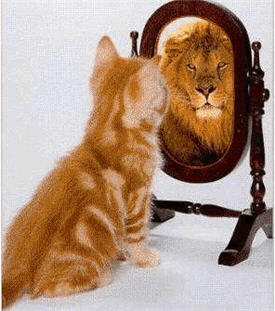
So you took a leap of faith and wrote a story. Hell, you even edited it and polished it until you’re certain it’s perfect. But now, you find that manuscript sneaking toward the darkest end of your file drawer. You tell yourself that you only wrote it for fun, or that it’s for your enjoyment only, but the words feel hollow.

Sharing your work with someone else can feel like the hardest or scariest thing on earth. Those are your words, after all, and what if that other person doesn’t like them? Here are some things to consider before letting that story go hide with the dust bunnies forever:

  •  You are not your work. Sure, you wrote those words, you imagined the plot. But characters do tend to have a mind of their own, and you have to remember that your characters’ actions are not necessarily your actions. Also, most readers identify with the characters – not the author.
  •  We all need an extra pair of eyes. The truth is, none of us are perfect, and we all make mistakes we can’t see. Regardless if it is helping spot typos or plot holes, having someone read your work will help it become more polished. They’ll help you catch the things you miss.
  •  If you love something, let it go. Especially if you’re serious about seeking publication, you have to get used to the idea of other people reading your work. Consider the last, best book you just read. Where would you be if that author never let it go free? Your story could very well be the same.

Sharing your work can feel like a bad idea. But with the right critique partners and with an open mind, the benefits to your writing can be limitless.

* * *

The woman known as Heather S. Ingemar is a bestselling author of dark short stories for teens and adults and an accomplished folk musician. She loves coffee, tea, intravenous Mountain Dew, cats, and motorcycles. She is currently at work on her next tale, or maybe avoiding work by shooting around canyon corners on her Suzuki Savage LS650.

* * *


Join Heather for her next stop on her
‘Spooky Times’ Blog Tour, October 30th at The Dark Phantom Review!
http://thedarkphantom.wordpress.com/

To learn more about Heather S. Ingemar, please visit her website:
http://ingemarwrites.wordpress.com/

Don’t miss Heather’s recent release:

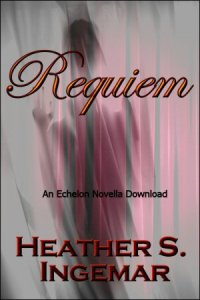
Click Cover to Buy Now!